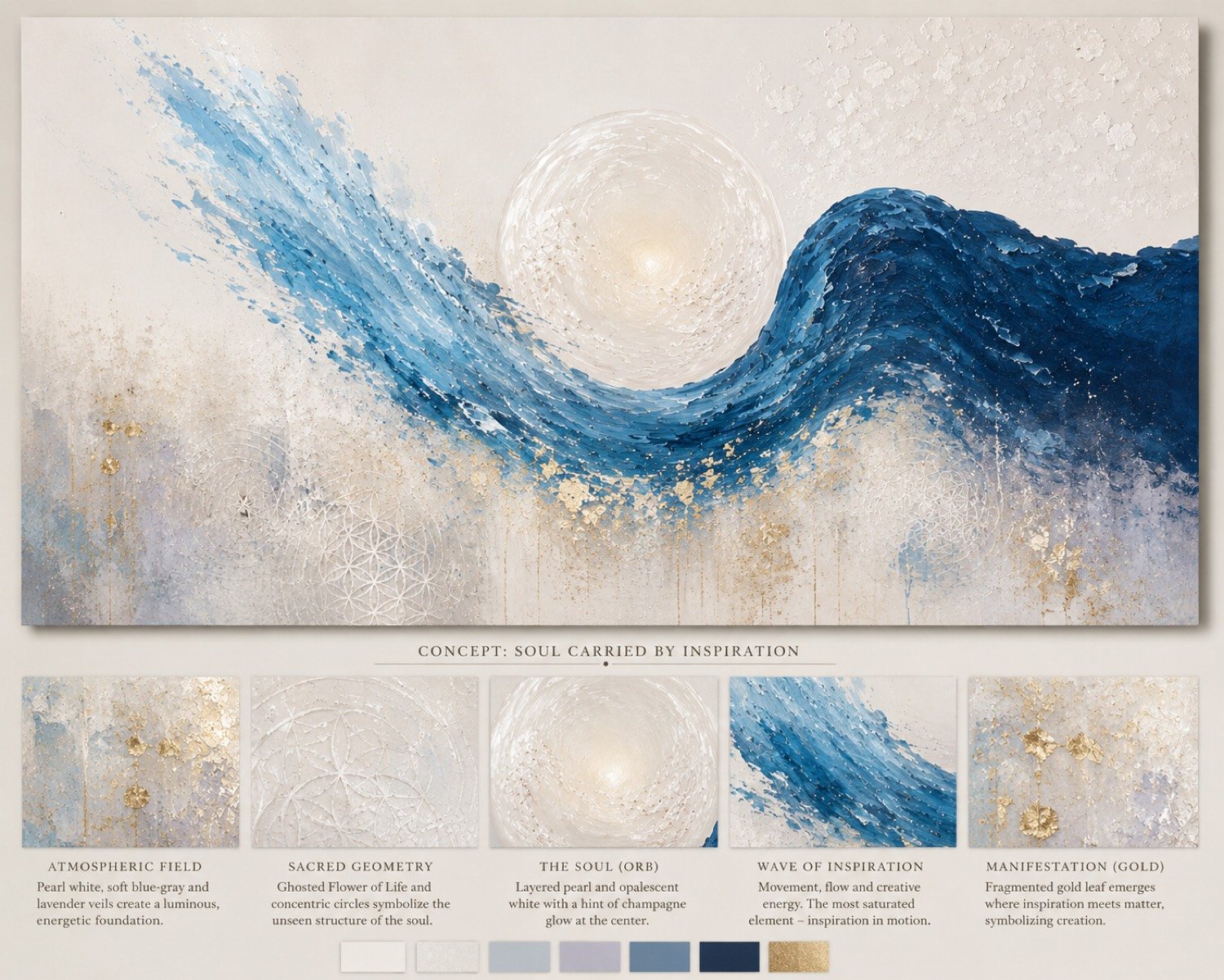
Gold is not what shines first.
Symbols matter because human beings do not live by information alone. A person may understand a concept intellectually and still fail to remember it when it matters most. In those moments abstract language often proves too thin. What is needed is not only explanation, but image — something condensed enough to be carried, rich enough to be revisited, and durable enough to gather meaning over time.
Gold, in the modern imagination, is often reduced to wealth, status, luxury, excess, or prize. If Aurum used gold in only this sense, it would collapse at once into vanity. That is not what gold means here.
In Aurum, gold functions first as a symbol of refinement. It names the possibility that what begins as raw material — confused, wounded, unrealized, contradictory, unintegrated — need not remain in that state forever. Gold therefore does not symbolize perfection. It symbolizes tested coherence.
Perfection imagines flawlessness, finality, and immunity from contradiction. Refinement assumes there is work to be done. It assumes friction, fire, labor, discernment, and repeated return. Gold is not the image of someone who has escaped the human condition. It is the image of someone who has entered it more truthfully.
This symbolic logic has ancient roots. Across alchemical traditions, gold came to represent the culmination of transformation. Later readers, especially Carl Jung, found in alchemical imagery a profound mirror for psychic and spiritual transformation. Aurum belongs to that symbolic lineage, though it does not simply repeat it.
It adopts gold as a living metaphor capable of speaking across recovery, psychology, spirituality, aesthetics, and ethical formation. Gold becomes the sign of what happens when a person does not merely survive their material, but works with it.
Gold can be misread as elitism: the notion that some people become more precious than others. That is not Aurum’s claim. Human worth is not earned by refinement. Gold refers not to superior value of personhood, but to the increasing integration of life.
Gold can also be misread as polish: the belief that what matters is appearing luminous. Polish alone is among the most dangerous counterfeits. A life can look golden from a distance while remaining internally disordered. Aurum has no interest in gold as surface treatment. The gold it seeks must be structural.
Structural gold appears when a person’s values and practices begin to align. When what they say becomes more accountable to what they do. When desire is no longer organized only around relief, approval, escape, or domination. When beauty ceases to be compensation and becomes embodiment.
Aurum Gold is not awarded. It is cultivated. Cultivation is not self-manufacture. We are shaped by inheritance, wound, grace, limitation, body, history, and mystery. But within those conditions there remains real agency — the labor of participation in one’s own refinement.
To use gold truthfully is to submit to a refining question: Where is my life still divided? Where do I glitter falsely? Where am I ornate but unstable, insightful but undisciplined, spiritually articulate but ethically untested? What in me is merely plated, and what is becoming substance?
Aurum Gold is the state of lived integration in which a person’s identity, values, practices, relationships, creativity, and service become increasingly coherent with one another. Not flawless. Not finished. Not superior. Increasingly coherent. That is the gold worth seeking. Not as trophy. As form.