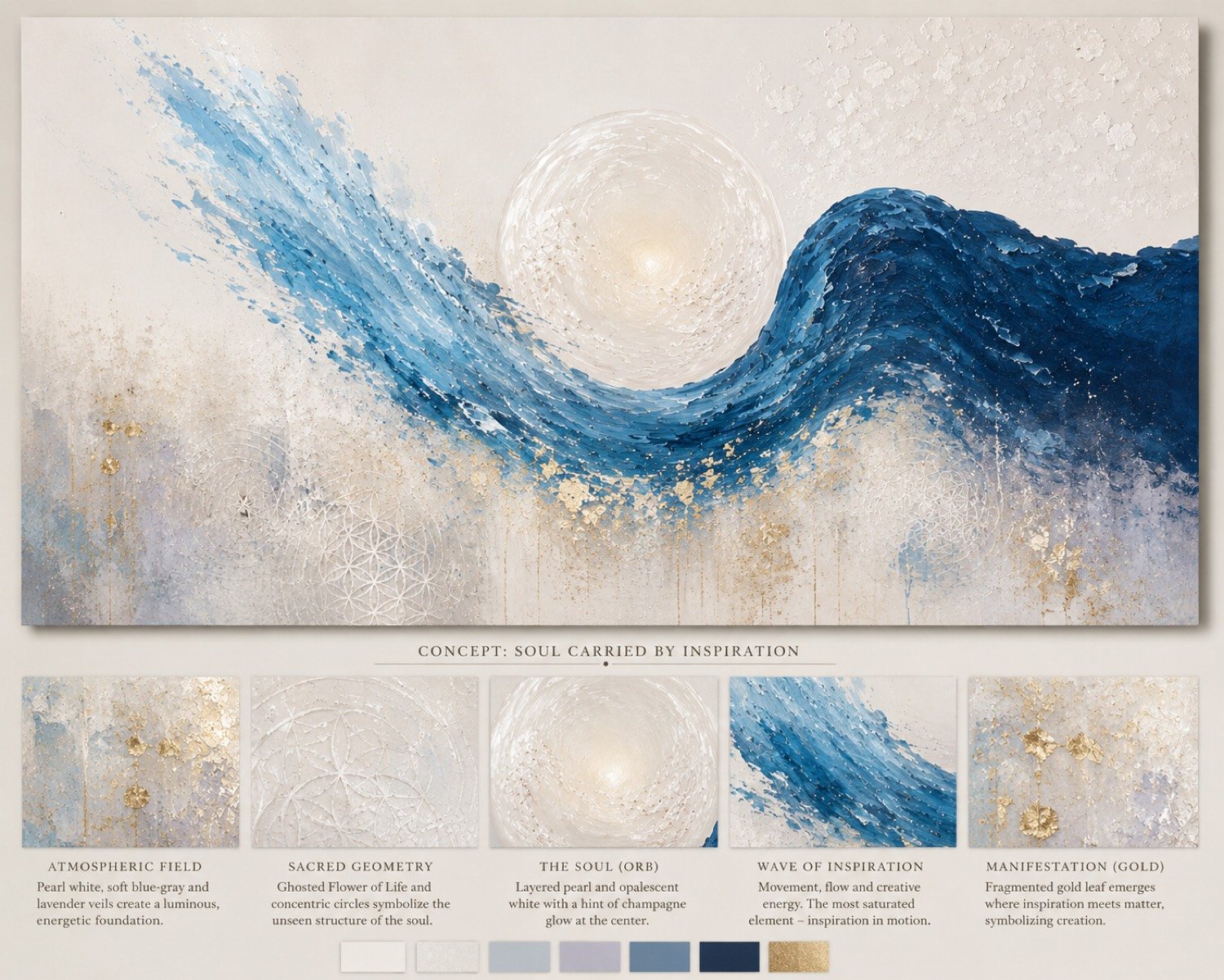
There is a particular kind of suffering that does not always look dramatic from the outside.
A person continues living. They wake, speak, work, socialize, strive, desire, perform, adapt, and proceed. They may remain outwardly capable. They may even become outwardly impressive. Yet underneath the visible life, a subtler disorder persists: a division within the self that makes coherence difficult, embodiment unstable, and meaning hard to sustain.
This condition can be called fragmentation. It is not merely confusion, though confusion often accompanies it. It is not merely pain. It is more specific. It is the experience of being divided in ways that prevent a person from living as an integrated whole — when values and actions separate, when identity and embodiment lose contact, when beauty becomes detached from integrity, or when spirituality floats above the actual conditions of a life rather than entering them.
A fragmented life can still be very active. It can still be aesthetically sophisticated, socially legible, professionally ambitious, emotionally articulate, spiritually curious, and even morally serious in language. But activity is not the same as coherence. Expression is not the same as integration. Knowledge is not the same as embodiment.
We live in an age saturated with language about selfhood, healing, identity, optimization, spirituality, image, and transformation. Access to language does not guarantee access to wholeness. In many cases, abundance itself becomes another source of fragmentation.
To inherit fragments is not a moral failure. But to remain governed by them indefinitely is a form of quiet surrender. Many people sense this long before they can name it. They feel themselves living in pieces. The person does not always lack desire. More often, they lack a vessel strong enough to gather the parts into relationship.
The problem is not simply that people suffer. The problem is that suffering often becomes disorganizing rather than refining. Fragmentation cannot be reduced to pathology alone. It is also existential, relational, aesthetic, spiritual, and ethical. A person may be fragmented not only because they are wounded, but because they have never been taught how to bring the different dimensions of life into living coherence.
People adapt to divided living. They become practiced in self-expression without self-governance, insight without discipline, aspiration without containment. In time, the distance between inner knowledge and outer life can begin to feel ordinary.
Aurum begins as a refusal of that settlement. The first task is honesty — about where life is split, where values and practices diverge, where spirituality has become abstraction, where beauty has become compensation, where selfhood has become performance. Such honesty is not meant to humiliate. It is meant to begin the work.
When fragmentation hurts, when incoherence begins to offend the conscience, when performance no longer satisfies, something vital may already be stirring. That stirring is often the beginning of transformation. To see fragmentation clearly is not defeat. It is the beginning of gathering. And gathering, if sustained with honesty and discipline, is the beginning of gold.