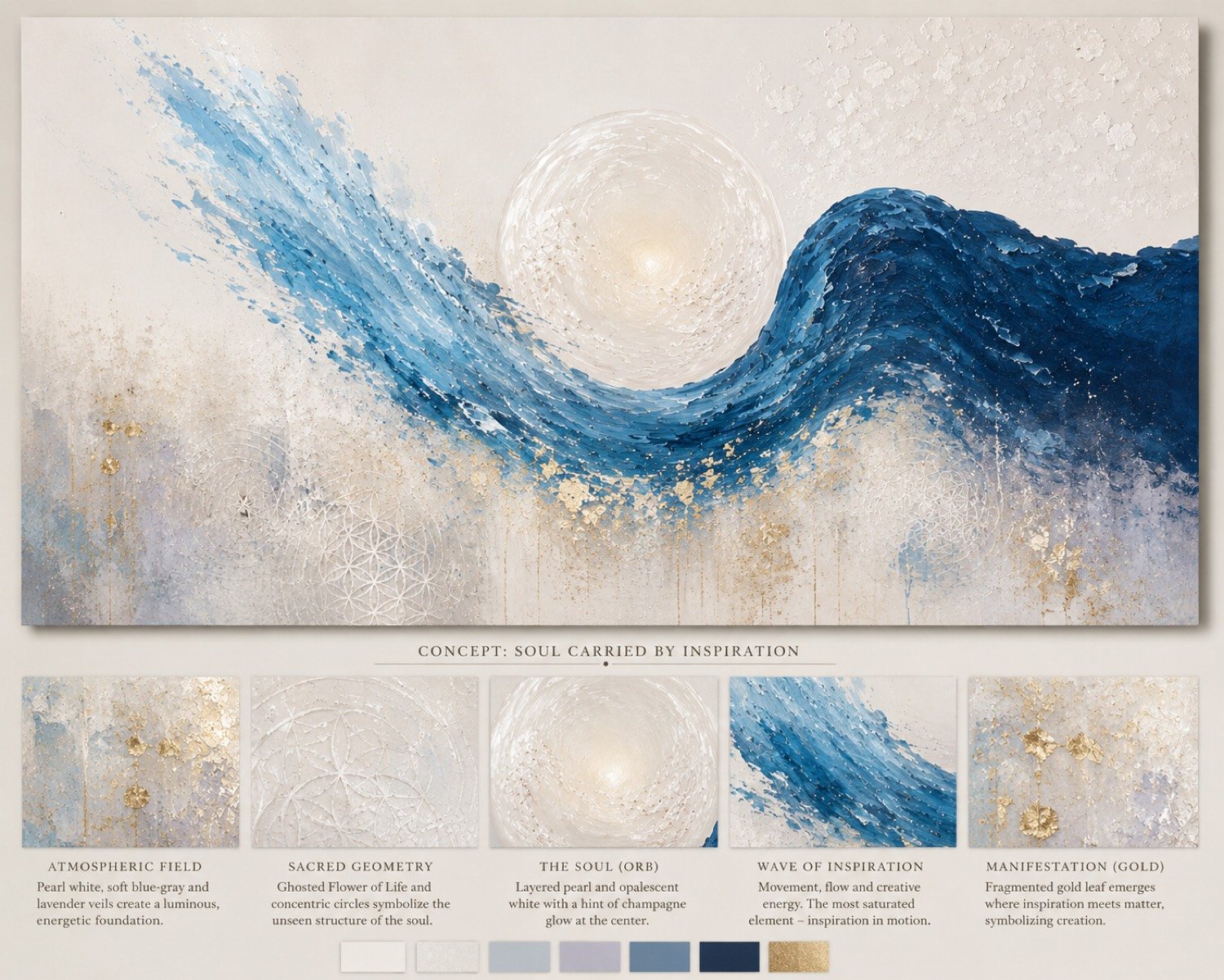
Nothing becomes auric by admiration.
If fragmentation names the condition and gold names the aim, then transmutation names the work. Without transmutation, Aurum would collapse into aspiration — a framework that describes pain elegantly and leaves unexplained the central question: by what process does a human life actually change in substance?
Transmutation is not a synonym for reinvention. It is not the fantasy of becoming someone entirely other than oneself. It is not an aesthetic performance of metamorphosis. It does not ask a person to escape their material. It asks them to enter it truthfully enough that it can begin to change form.
Every real transformation begins with material. In Aurum, the material is not metal but life as it is actually being lived: grief, longing, contradiction, desire, shame, habit, wound, and unrealized capacity. A person cannot transmute what they refuse to touch. They cannot refine what they insist on misnaming.
Raw material alone does not refine itself. It can scatter, harden, erupt, or repeat. Transmutation requires a vessel: recovery structure, spiritual discipline, a journal, a relationship governed by honesty, a schedule strong enough to hold a life through fluctuation. Fire without vessel does not transmute; it burns indiscriminately.
If contact provides the material and containment provides the vessel, fire provides the change in state. In lived terms this heat appears as truth that disrupts denial, grief that can no longer be deferred, accountability that strips self-protective narratives, the repeated ordeal of returning where one would prefer to escape. Aurum does not glorify suffering. Fire becomes part of transmutation only when it is integrated into process.
Not everything in a life should be preserved simply because it belongs to one’s history. Transmutation requires discrimination: hunger from compulsion, tenderness from self-erasure, power from domination, beauty from vanity, authenticity from reactivity, intensity from meaning. Without this work of separation, everything blurs.
Aurum refuses the fantasy of instantaneous gold. A catalytic moment is not the same as structural transformation. Time reveals whether a discipline survives boredom, whether a boundary survives loneliness, whether a spiritual practice survives dryness. Gold worthy of trust must survive time.
A person must participate actively in transformation, yet they cannot fully control the process. Too much passivity leads to drift. Too much control leads to rigidity, performance, or spiritual inflation. The path of transmutation lies between these distortions.
Has the transformation changed the substance of the life, or only its surface? A person may change language, appearance, community, or declared identity without undergoing real transmutation. Substance cannot be borrowed. It becomes visible in what one does when unseen, how one responds to correction, whether one apologizes, whether desire is becoming less tyrannical.
What is raw need not remain raw. What is divided need not remain divided. But none of this changes because one admires the symbol. It changes because one enters the work. Gold is the image of the aim. Transmutation is the law of the path.