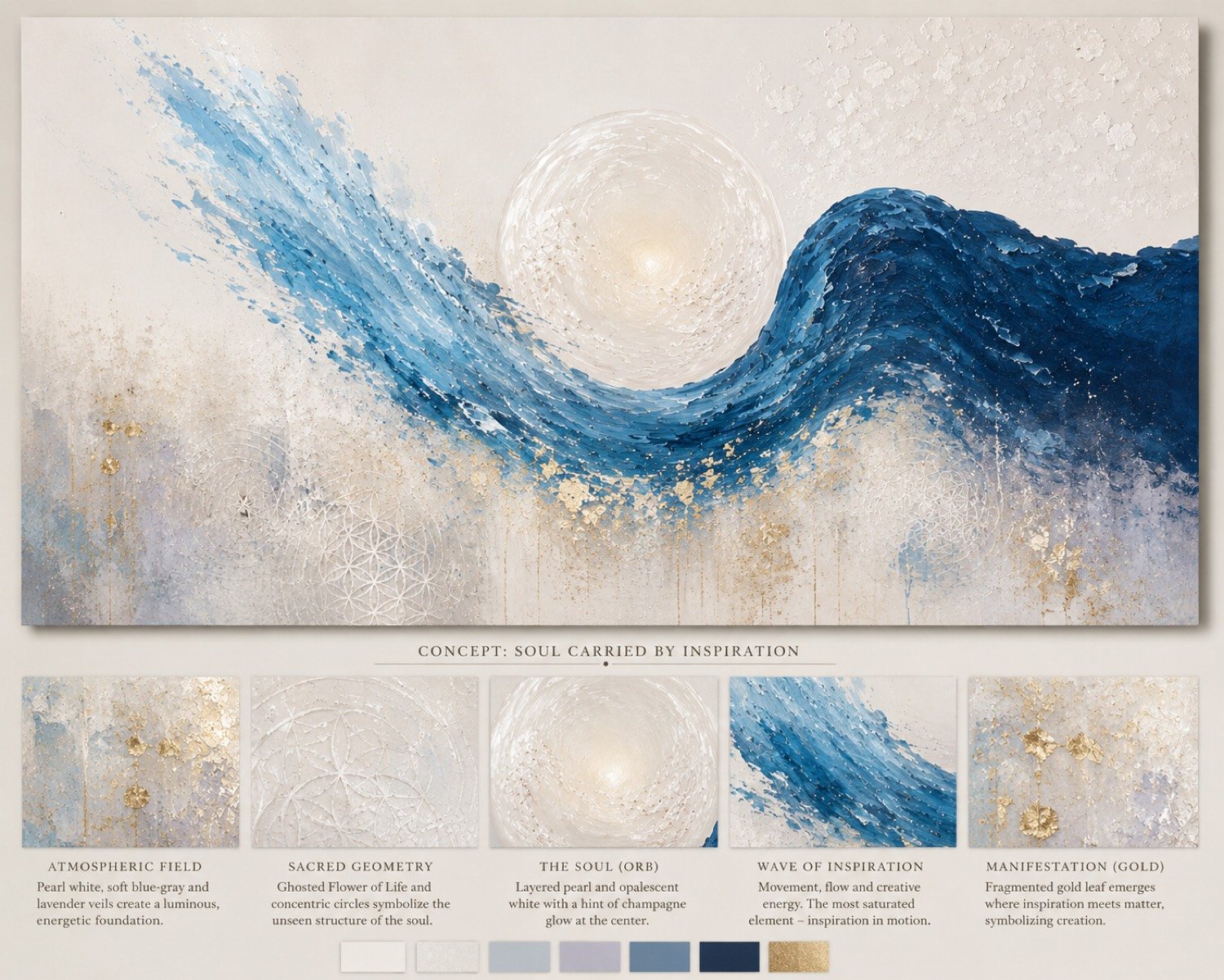
The aim is not to become impressive. The aim is to become coherent.
If transmutation names the work, integration names its aim. Not its finality — a human being remains unfinished while alive — but the direction in which the work of Aurum moves: from dividedness toward coherence, from estrangement among the parts of a life toward greater relation, order, truth, and trustworthiness.
Many people, once awakened to their fragmentation, imagine healing as the absence of tension. They imagine wholeness as sleek emotional resolution in which nothing unruly remains. This is not integration. Integration does not mean becoming less complex. It means becoming less divided.
A person can be internally complex and still deeply integrated. They can contain sensitivity and strength, grief and gratitude, longing and discipline, power and tenderness. Complexity is not the enemy of coherence. Coherence is the art of bringing complexity into right relationship.
Fragmentation is not the mere presence of many parts. It is the estrangement of those parts from one another. One part performs competence while another remains in concealed collapse. One part speaks spiritual language while another refuses accountability. The issue is not plurality. The issue is disconnection.
Integration is psychological, relational, ethical, spiritual, and aesthetic at once. Values must be carried into action. Spirit must descend into life. Beauty must tell the truth of a life rather than distract from its disorder. The room, the garment, the ritual, the tone — all begin to serve a life that is becoming more intentional.
Acceptance is required, because a person cannot integrate what they despise. But acceptance alone is not enough. Some parts have been over-empowered by fear, addiction, vanity, or habit. To integrate a life is not to permit every part to rule. It is to bring the parts into relation under a more truthful center.
A fragmented life is often arranged around unstable centers: relief, image, approval, secrecy, urgency, appetite, control. An integrating life must gradually be arranged around stronger ones: truth, dignity, reverence, discipline, responsibility, service. This is a work of repeated transfer of authority.
Congruence is agreement in motion — the narrowing of the gap between what one knows and what one lives. One of the hidden agonies of fragmentation is the erosion of self-trust. Integration slowly repairs this breach. The future self is no longer continually endangered by the present self’s evasions.
Integration is not a private luxury. It is an ethical development. A more integrated person is often more capable of doing less damage and more capable of creating genuine good. Not impressive in flashes. Trustworthy in form.
Intensity may create moments of fusion, but it does not by itself create durable coherence. Integration must survive the calendar, the kitchen, the conversation, the lonely evening, the apology. If it cannot, it has not yet become structural. That labor is among the most dignifying forms of work a person can undertake.